

More about that Dorico
/Recently, as you may recall, I opened a .musicxml file for an old Symphony for Band that I composed back in 1991, using Dorico to open a file exported from the late, great Finale. It was not a flawless transfer.
The very first notes of the piece are from the temple blocks, a set of five clam-shaped blocks of wood or plastic that have a resounding tock! sound when struck with a wooden mallet. The five cover a range of “pitches,” i.e., not ‘notes’ but a range from a high 'tick' to a low TOCK.
Here’s what that looks like in the score:
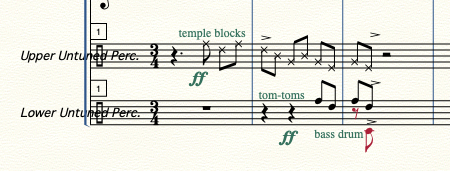
And here’s what that sounds like, more or less:
Here’s what it sounded like after a rough crossing over into Dorico:
After failing to create my own percussion map — through a combination of my decades-long failure to understand how percussion maps work, if they even do, even, and Dorico’s Teutonic brain structure of having every single nut and bolt visible and required to get work done — I decided to see if I could just trick Dorico into at least playing the right notes on the right instrument by using Doriclo’s published map.
I was not alone:
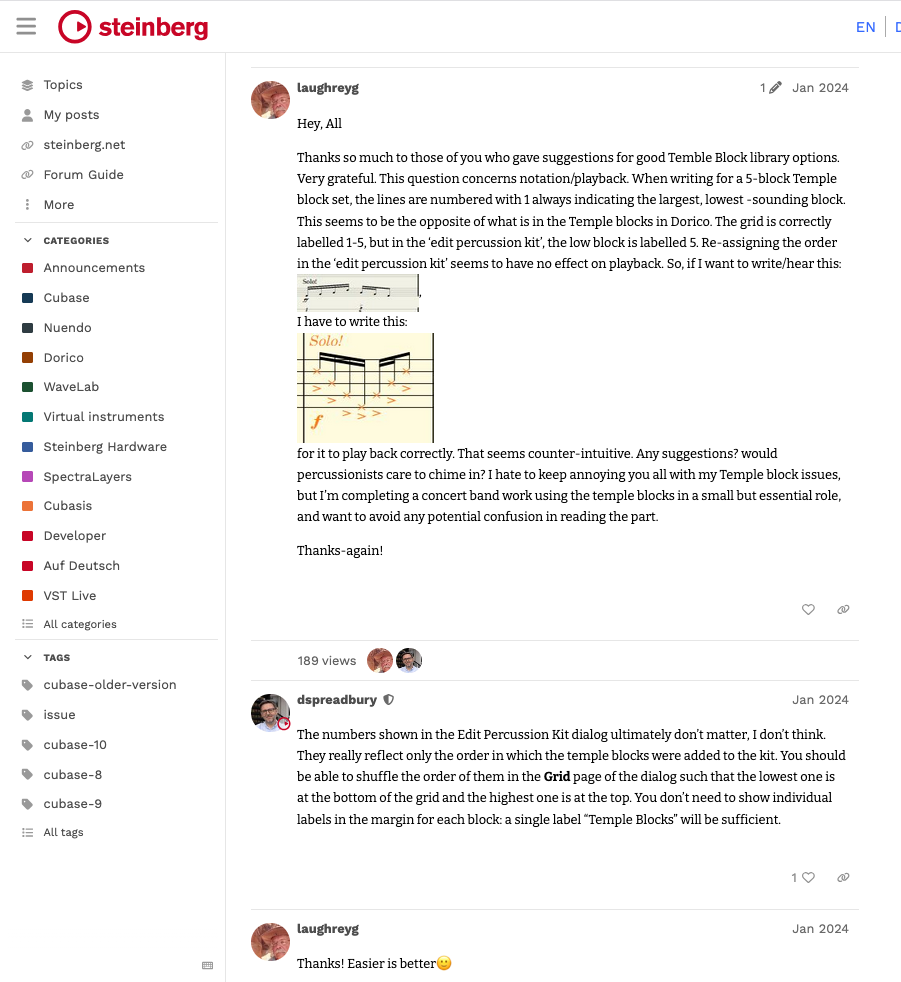
Here are where the five temple blocks are supposed to be on the staff, from C above middle C to the G above the staff.
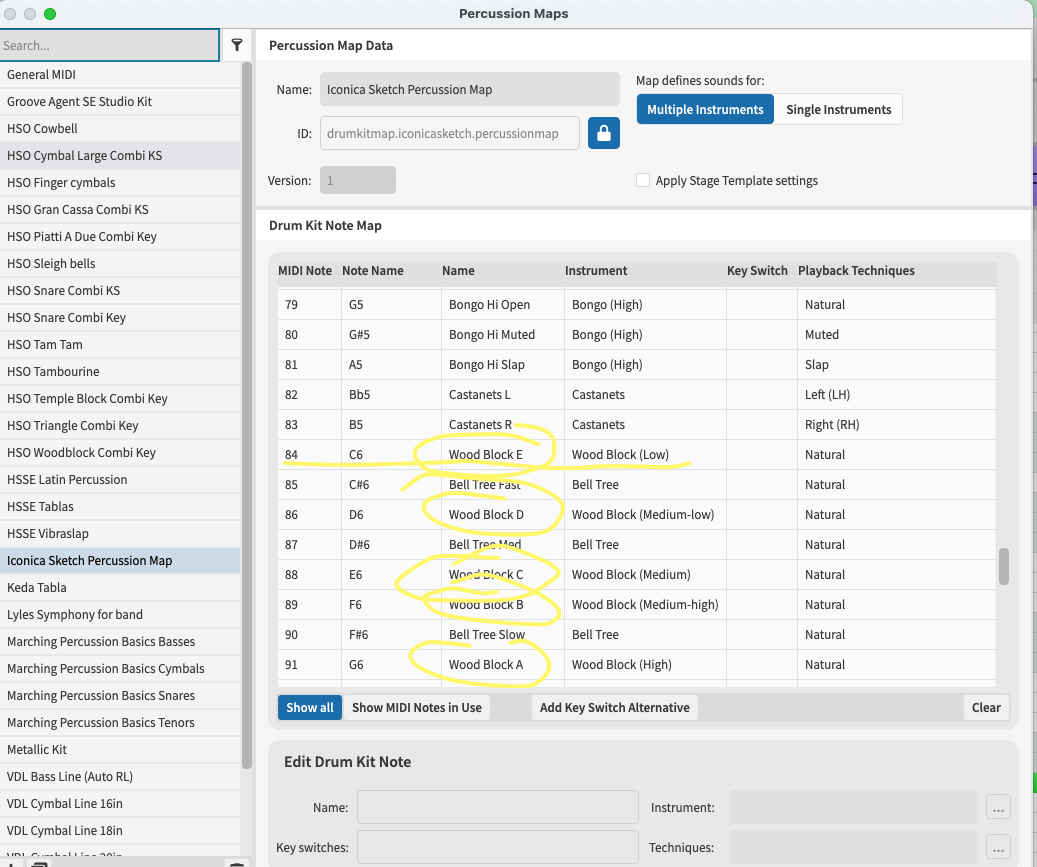
So this…
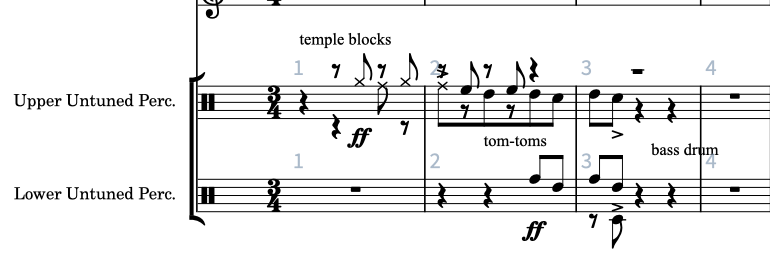
…should produce the correct sounds. It does not.
And if you look under the hood, you will notice a very odd thing: Three of those five wood blocks are nowhere to be found, not here…
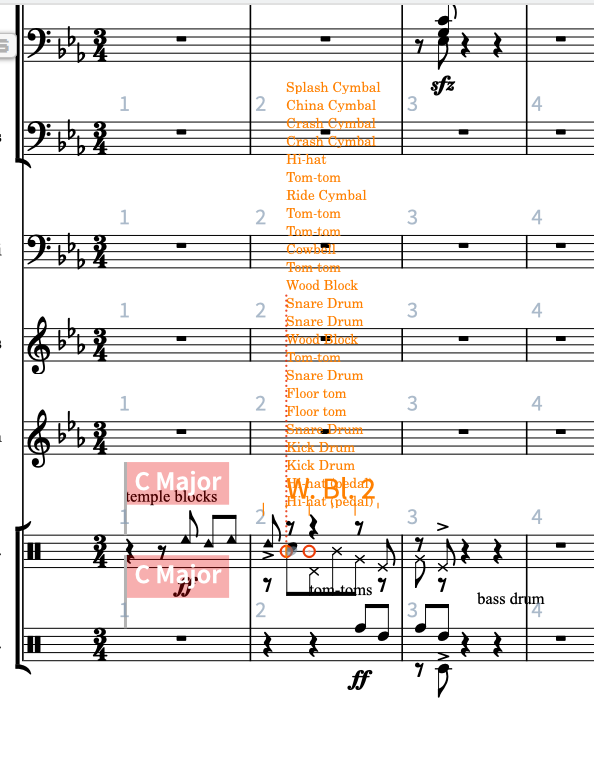
…or here.
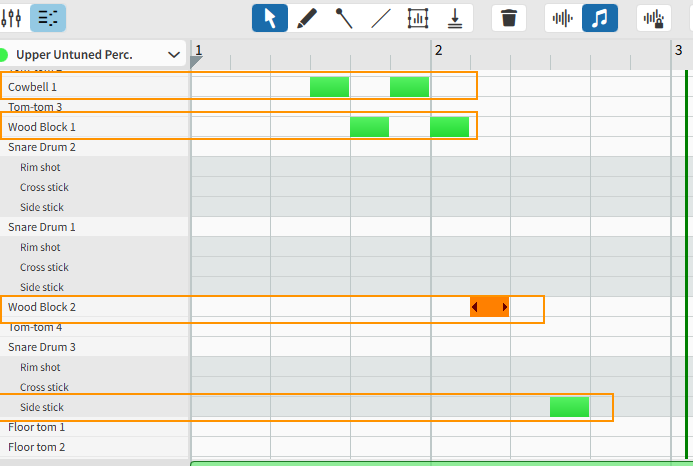
I will pause at this point to say that perhaps my woes are related to the fact that I have not upgraded my MacBook Pro’s OS since Finale offed itself two years ago — once it stopped working, Finale said, it would no longer work, and Apple promptly issued an update that killed it for good, so two years later I am a) still afraid to leave Finale completely behind; and b) still mostly completely at sea with Dorico (which is not completely my fault).
But that seems a bit unlikely to be the actual problem in this case.
::sigh:: More work is required.
NOTE: I actually fired up MuseScore, Dorico’s closest competitor, to see if it imported the .musicxml file of the piece in any kind of better. It was worse.
