

Funny Things
/Yesterday we went to the High Museum in Atlanta to see the Viktor & Rolf fashion exhibit, which was powerful in its own high-culture/high-concept way, but that’s not the art that had the biggest impact on me.
Instead, it was another exhibit — The Lost World: The Art of Minnie Evans — that inspired me.
Minnie Evans was the polar opposite of European superstars Viktor & Rolf: a black woman, born in 1892 to a 13-year-old single mother, who created her visionary art with limited supplies and no artistic training. Much of her art derives from her visions, which she said were from the universe and which she had experienced since childhood.
In 1934, she started her first work, finishing in 1935.
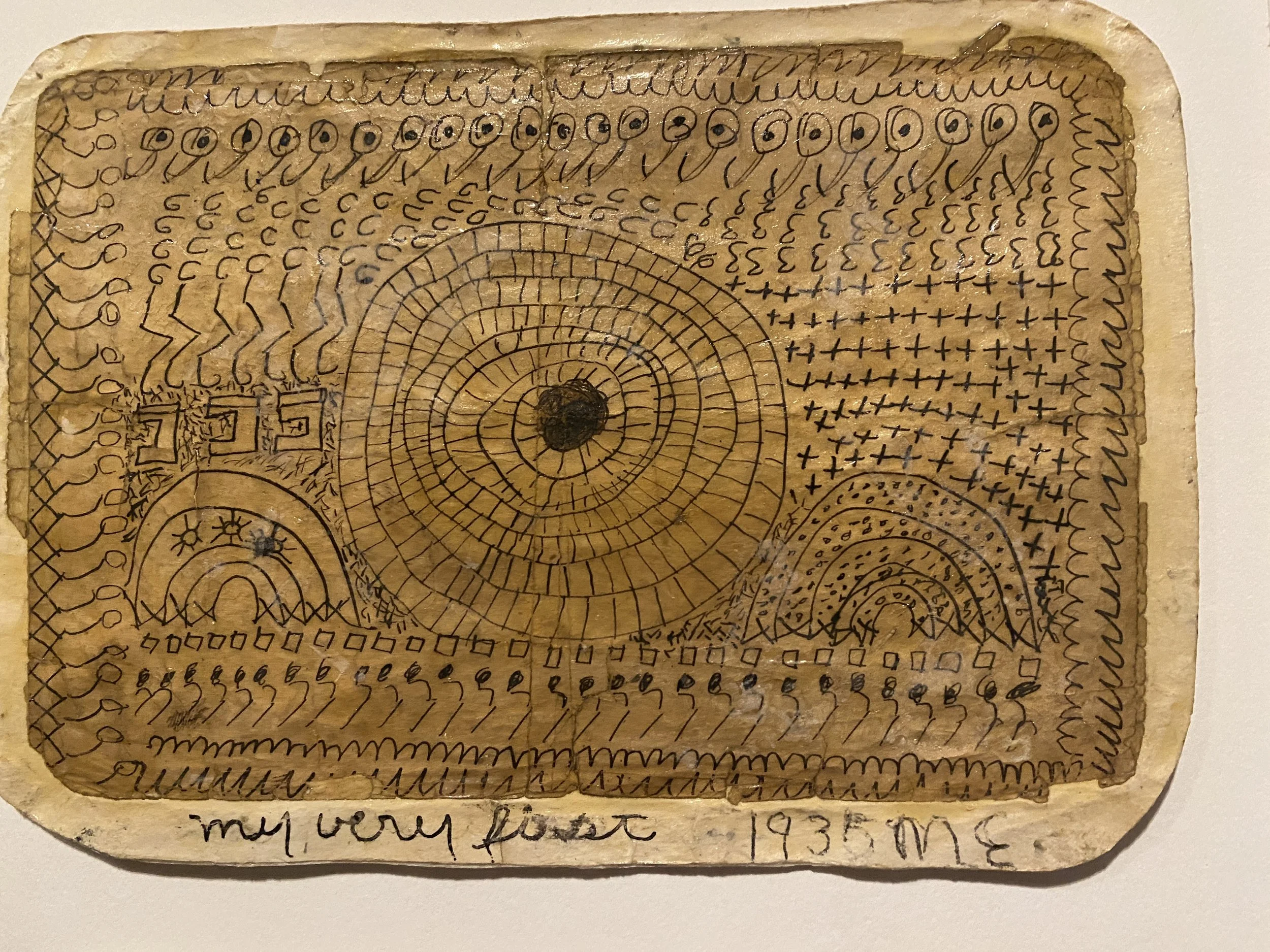
My very first, 1934–5
And then she kept going.
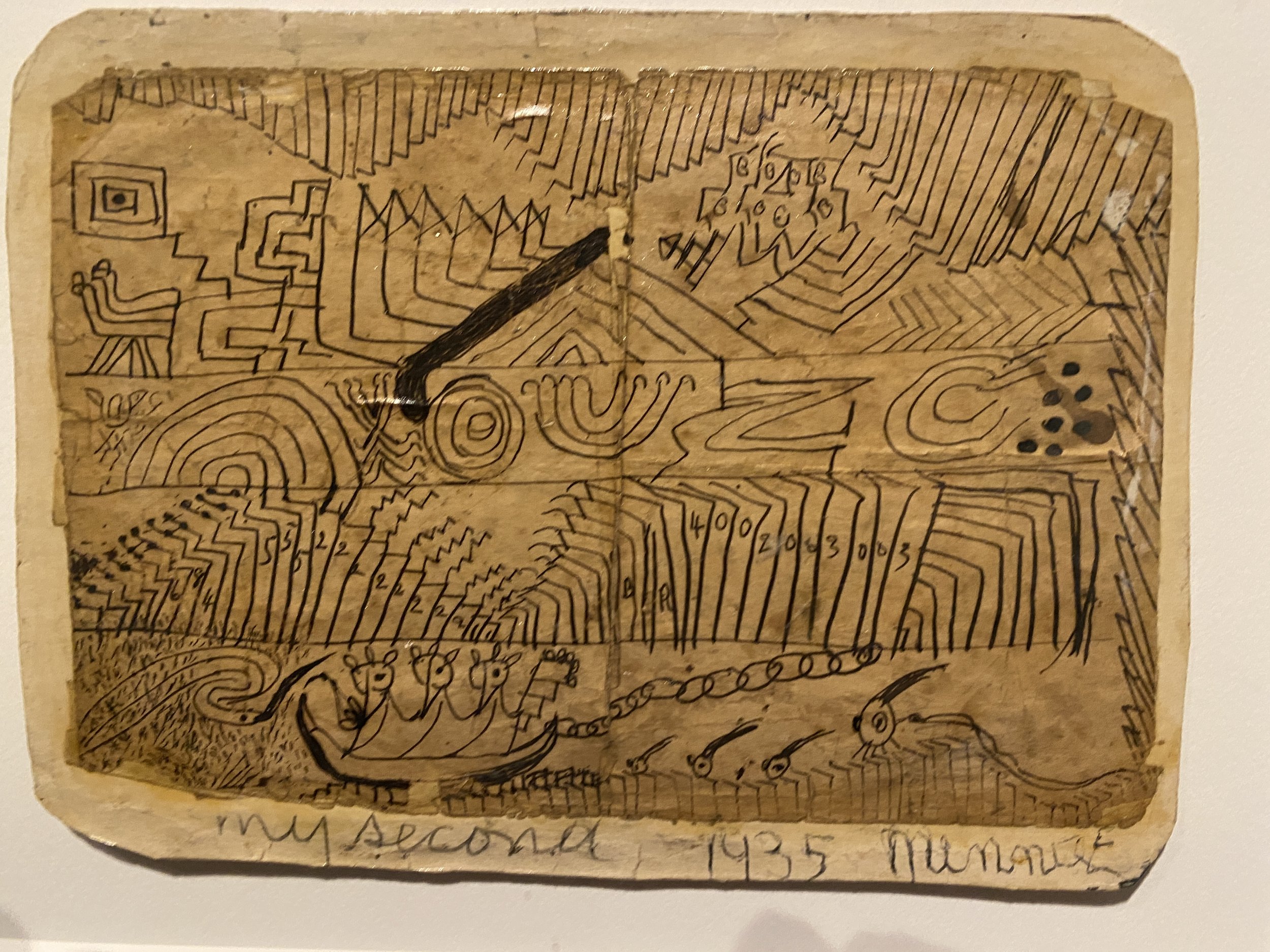
My second, 1935
Her explanation: “I had wrote my grocery order and after I tore that off then I had taken my pencil and went to making some funny things. I don’t know why but I just kept on making a lot of funny things.”
And there you go, boys and girls: You don’t need ‘permission’ to make funny things.
Her work was cryptic, mystical, prophetic. She kept drawing.
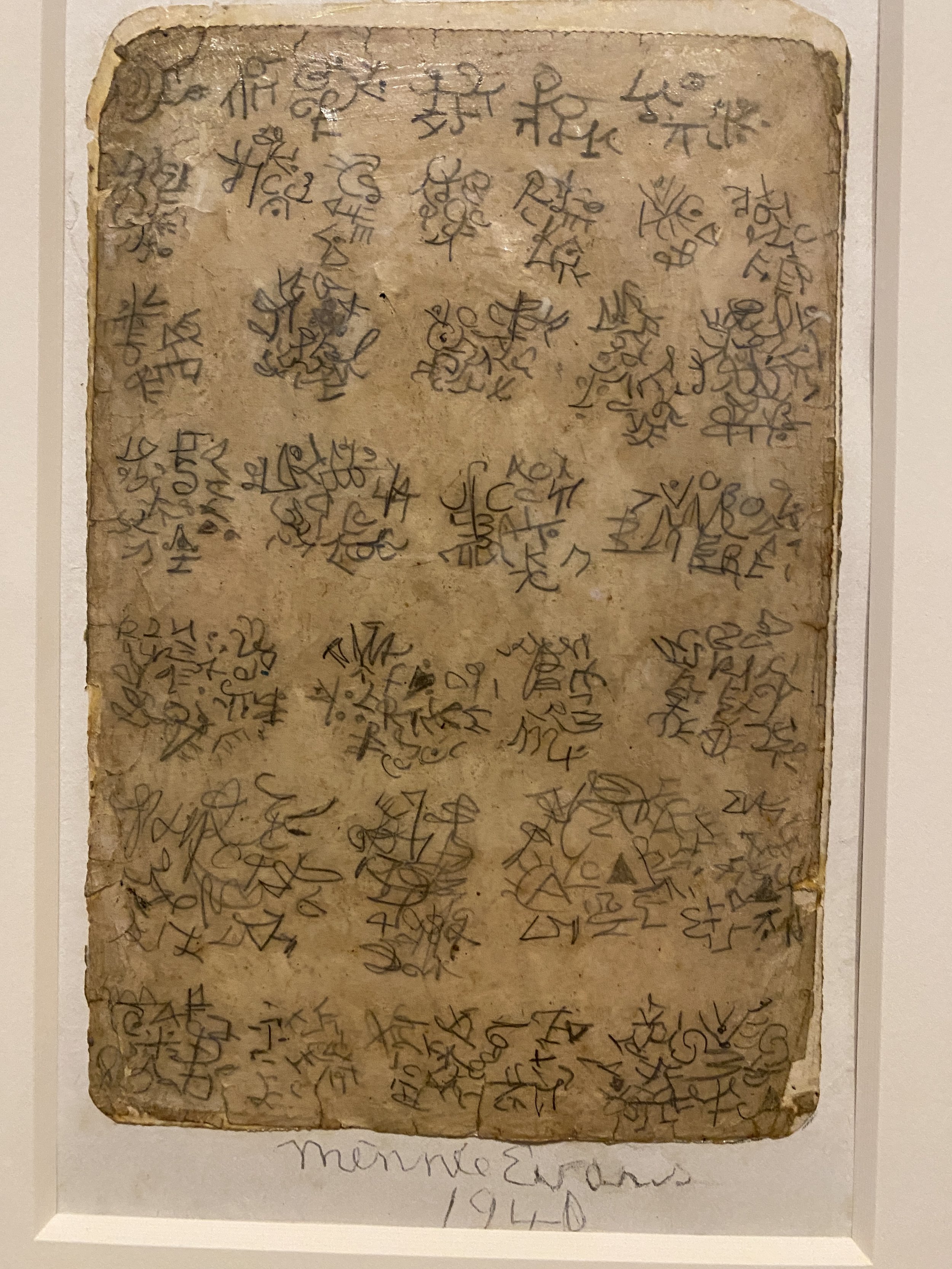
Untitled (ancient writing), 1940
Hieratic, asemic.
She began to add color, and her drawing shifted to more mystical images.
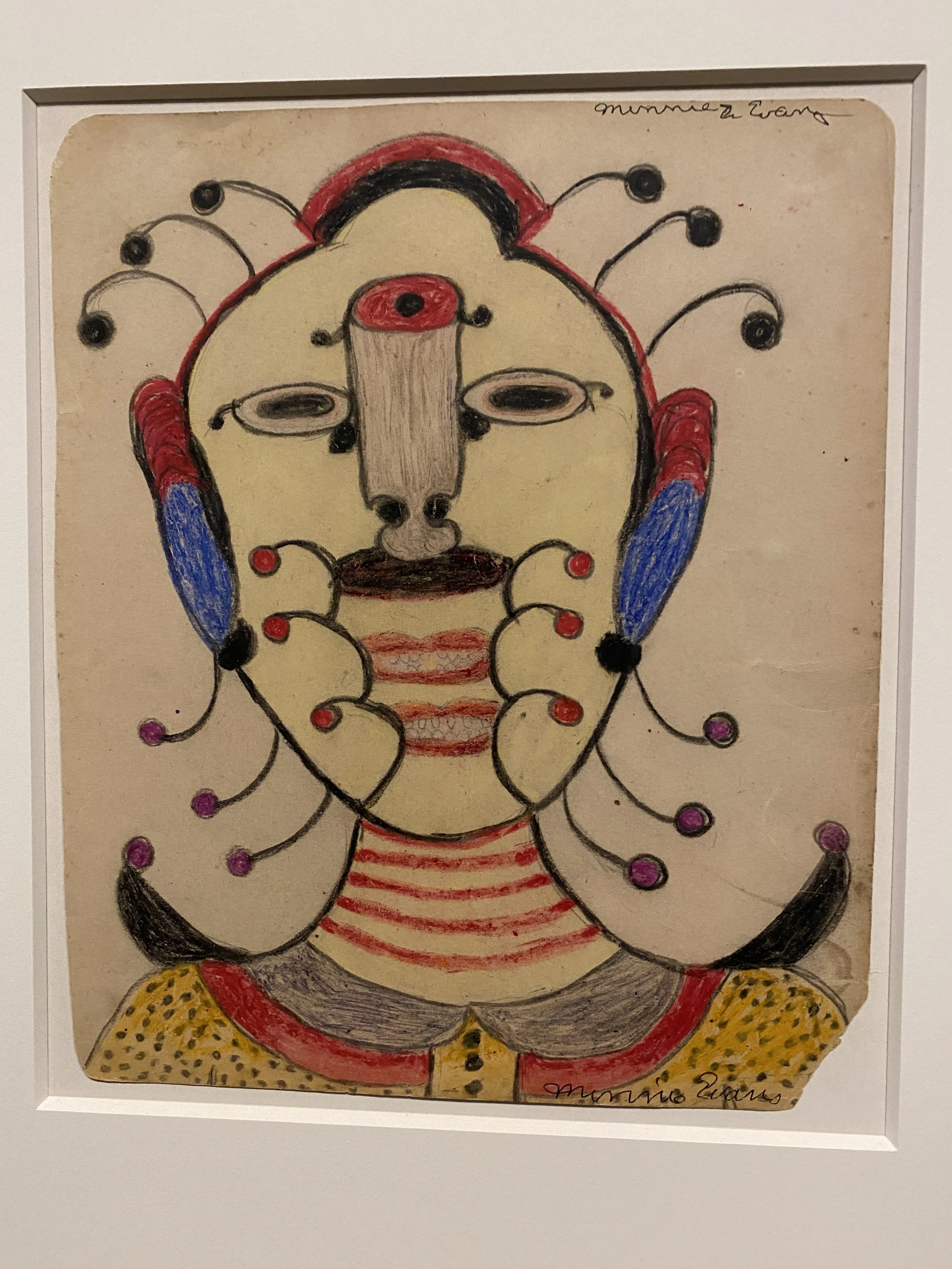
Untitled (Face with tendrils) 1944
According to the exhibit notes, Evans “favored Crayola crayons, which became widely available in the 1930s.” During the war, pigment shortages reduced the number of colors in each box. Then — and everyone reading this will have that little thrill of recognition — in 1958 Crayola “released its sixty-four-color box with a built-in sharpener,” and Evans’s work exploded in color.
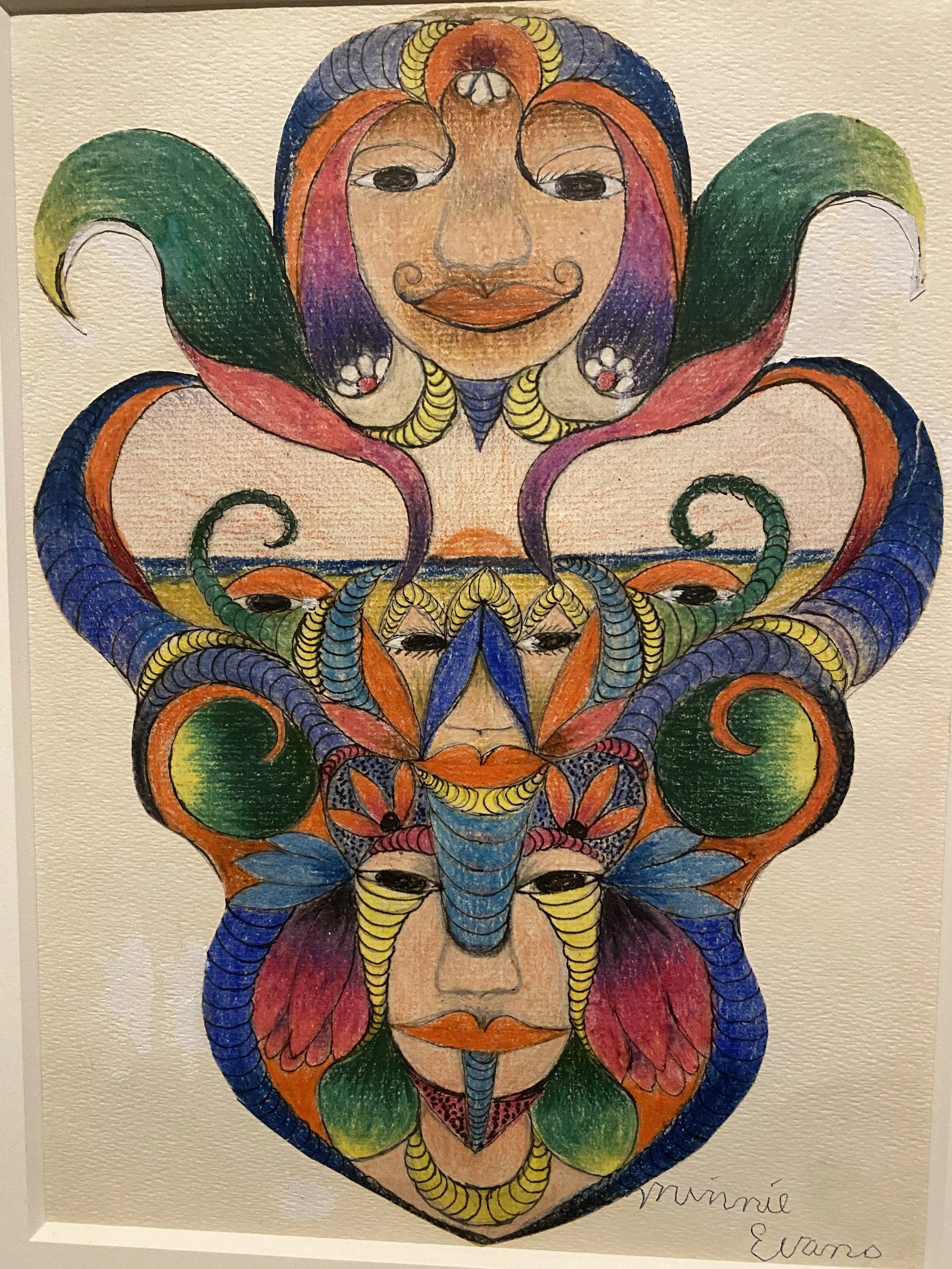
untitled (faces stacked with sunrise), 1950
In my never-to-be-written book, Lessons from the Folk, one of the Observations that are the framework of the book is “When given a choice, humans will tend to the ornate.” This is evident in Evans entire work: shapes evolve, split, multiply, put out tendrils. And the colors: vibrant, unsubtle, pure.
Verisimilitude? Pfft. Who needs academic polish when you can MAKE A LOT OF FUNNY THINGS?
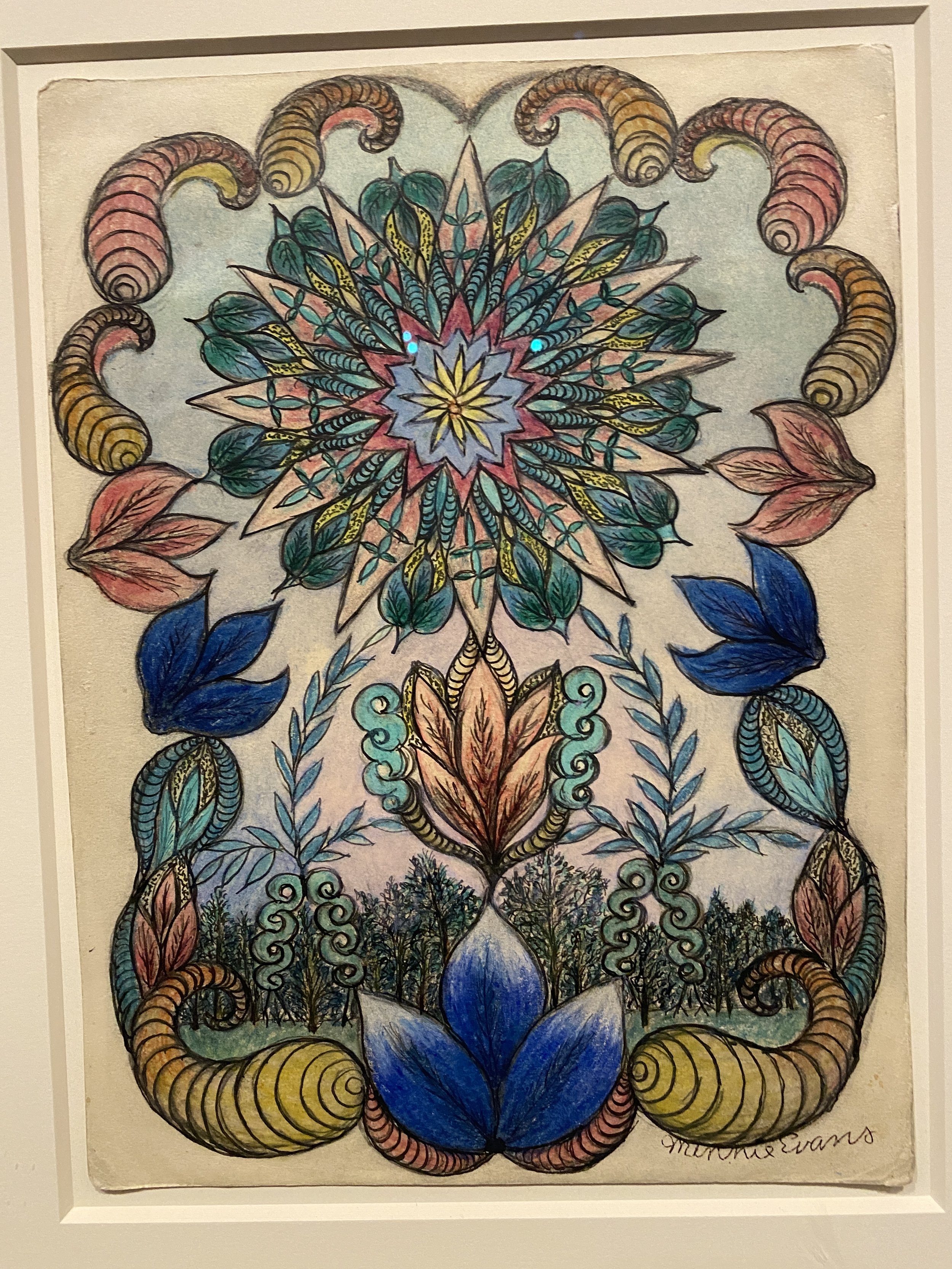
Untitled (stained glass-like form), 1962
She began to create mandalas, though she would not have used that term. Symmetry in all its variants were her standard.
Evans worked as a domestic servant in a large estate in Wilmington, NC. When she was in her mid-50s she retired from that job and became the admissions collector at the gate to the gardens, which had been recently opened to visitors. While she sat at the gate, she had plenty of time to create her funny things, and she would hang them on the gate, selling some works and giving others away.
People noticed. Lots of people noticed, people with connections, and eventually the art world picked up on her. Her work was exhibited in New York and elsewhere, and her reputation was settled.
She went to New York for the first time in her life to one of these exhibits, and while there went to the Metropolitan and MOMA. Her takeaway? She needed to make her art bigger.
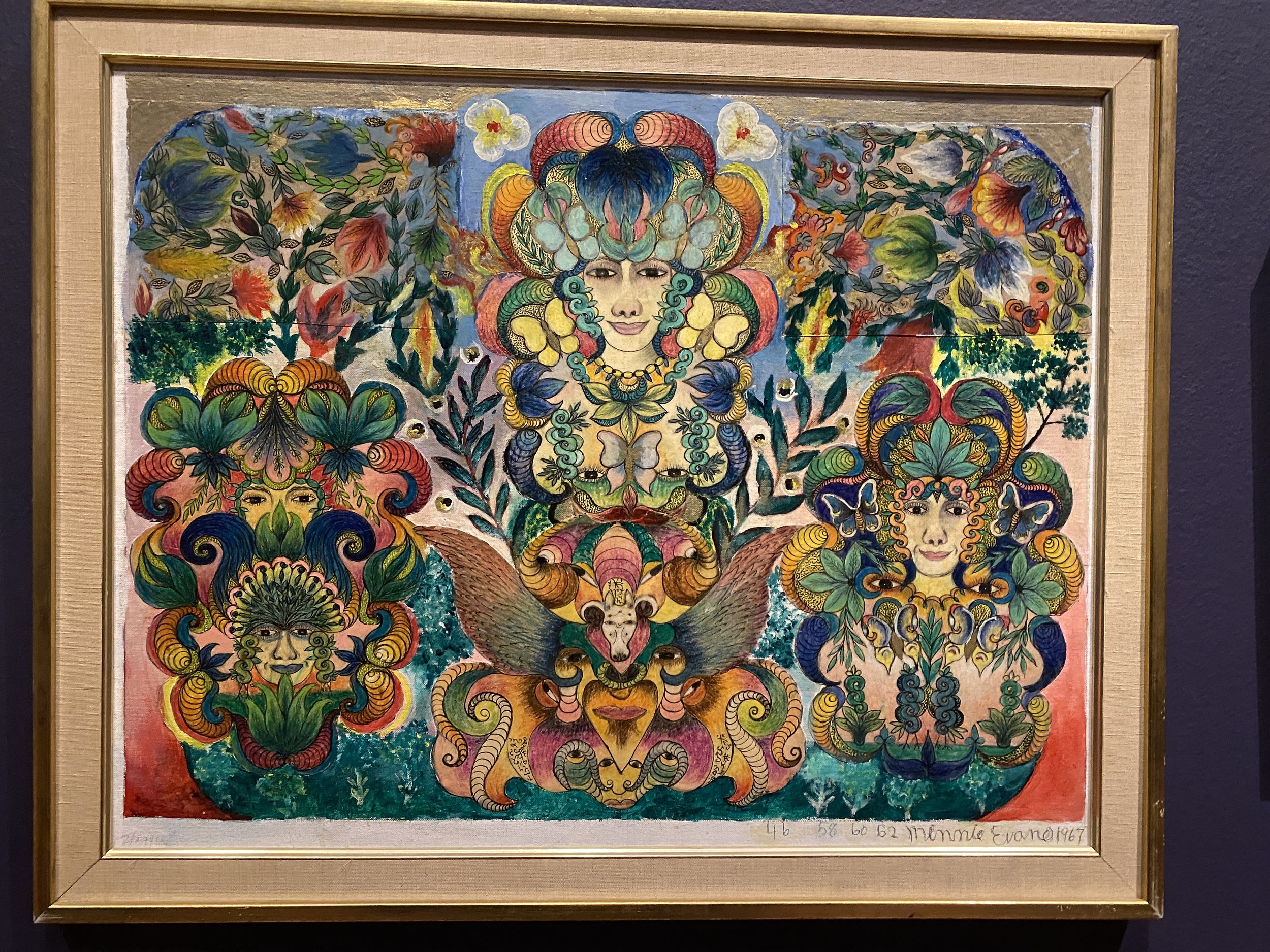
untitled (face, flowers, foliage collage, 1967
We emerged from Evans’s Lost World into the more traditional displays of the High’s collection.
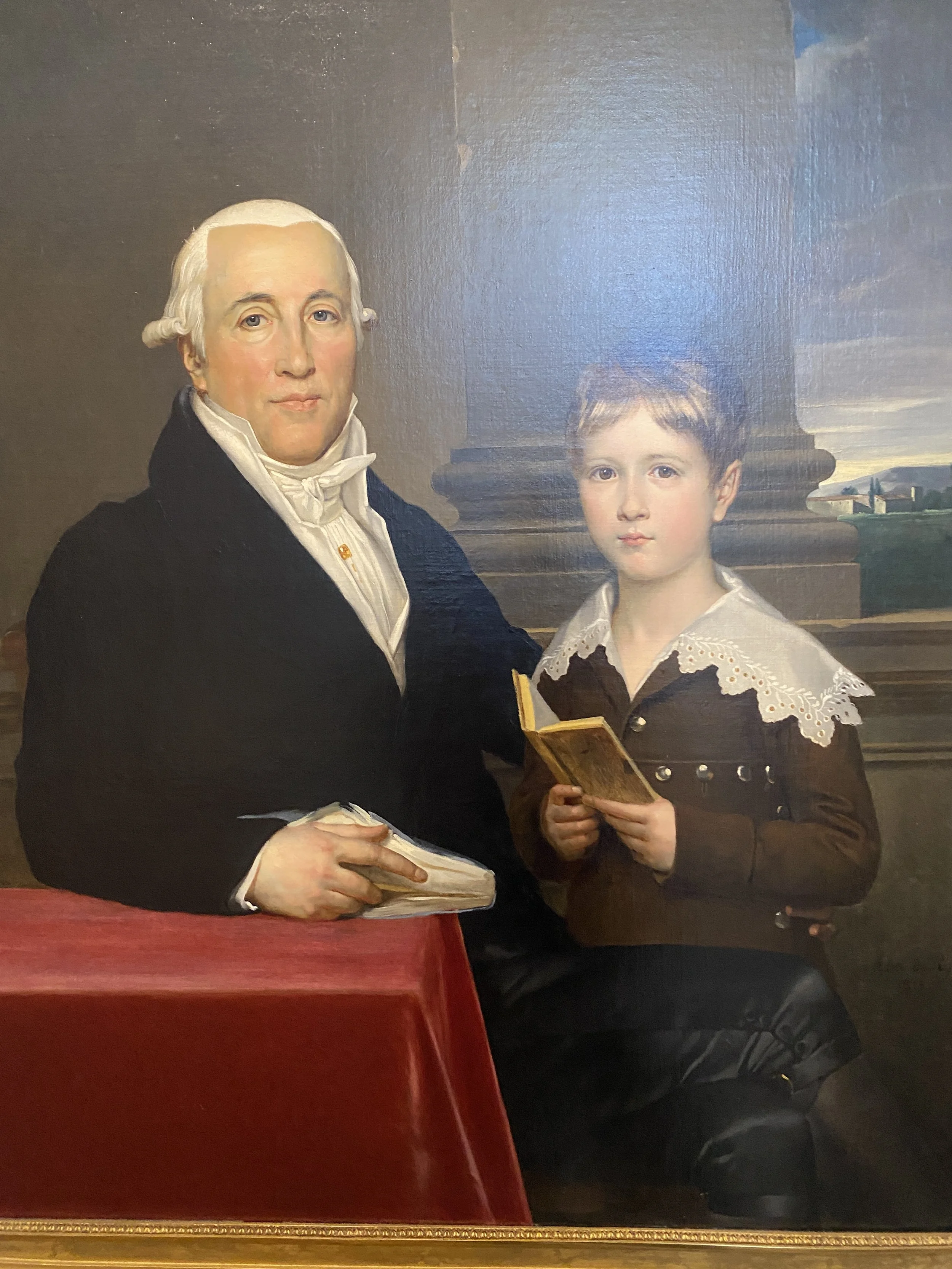
I failed to record the title/artist/anything. But you get the gist.
I was shocked at how pedestrian I found that art. I had no interest in it after the intensity of Evans’s work. And the excessive haute couture of Viktor & Rolf just came off as commercial meta-post-modern showboating.
The lesson I hope you take from this post is not that fame and fortune are possible for you too — MOMA, New York Times best seller list, the Tony Awards — but that you yourself are capable of producing FUNNY THINGS, and that you don’t have to be trained as an artist/composer/writer to make them. Nor do you need expensive art supplies: Crayola still makes that box of 64 colors! Go do that.
