

Rubber duckie...
/One of the email newsletters to which I subscribe is Jono Hey’s “Sketchplanations,” in which he provides a sketch as a visual explanation for some topic. The other day his topic was “rubberducking,” and it resonated with some Lichtenbergian advice I give to people.
(I will note that I am not a paid subscriber, so I have not read his suggestion that chatting with ChatGPT is an efficient way to rubberduck. I suspect I would disagree.)
Here’s his explanation of the term:
“The idea is so simple. Talking through your problem—often, or perhaps ideally, without a response or interruptions—is often enough to help you figure out how to solve it. I have heard of people having an actual rubber duck on their desk for this process.”
As it happens, I have a rubber duck on my desktop. (It is apparently the arch-nemesis of Abigail, the good and deserving Assistive Feline™, since she will every now and then take umbrage at it and knock it off the top of my monitor.)
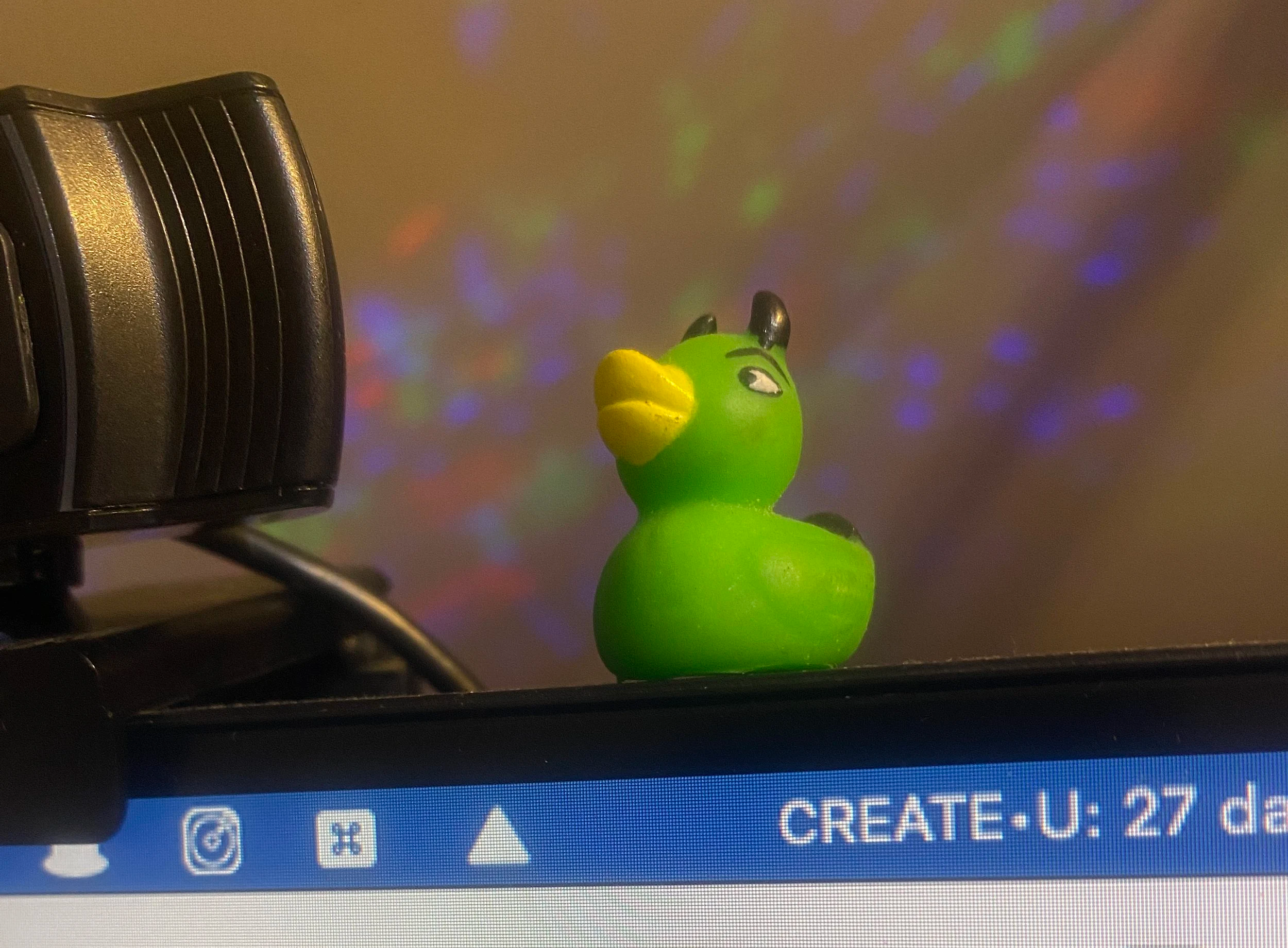
I do not chat with it, but the concept is the same as that which I tell people when we’re discussing GESTALT: If you find that you’re stuck on a project, whip out that WASTE BOOK and begin writing down your issues and questions. Make it a letter to someone — your brother, your high school teacher, Beethoven — who would be sympathetic to your problem. Explain it to them, what the problem is, why you’re stuck, etc.
Give yourself questions to answer: “What would happen if…” — “What are the different ways I could get to point x…” — “Have I missed a step?” — “Who could help me with x?” — “Should I use more green or blue?” … and then answer them.
Go meta and create your own sketchplanation for the problem.
You’d be amazed at how often verbalizing a problem will help you figure out how to solve it. Here, I’ll help you get started.
