

How to Write a Book: Step 1
/Hwæt!* See how the Precepts of Lichtenbergianism can guide you from thinking about writing a book — a shinyperfect — into actually writing a book! Follow along as we apply the Lichtenbergian Precepts to the process. (It’s actually pretty funny — and it works.)
RITUAL
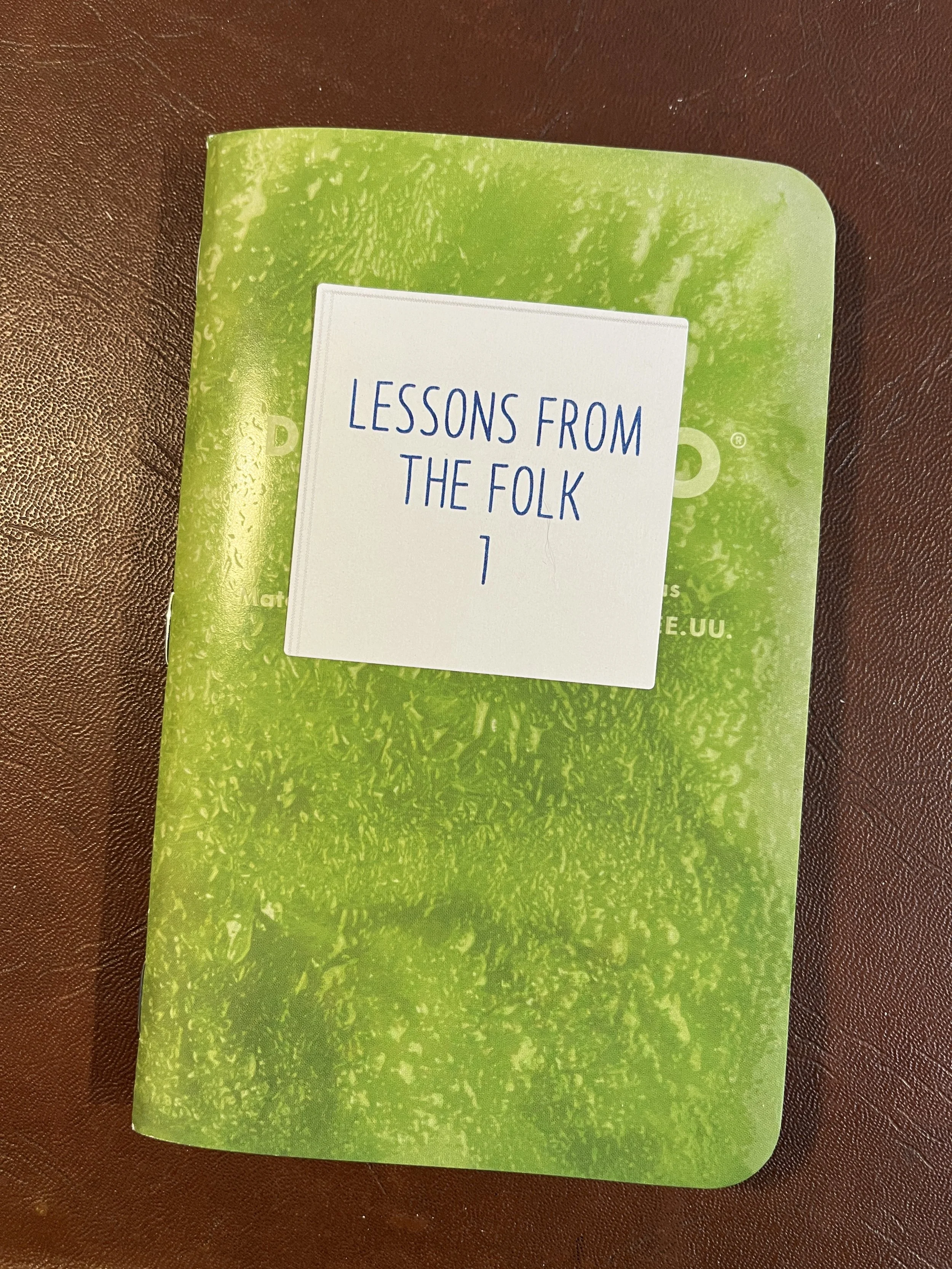
When I was writing Lichtenbergianism ten years ago, I started with WASTE BOOKS, scribbling in them willy-nilly, heading each page with its topic and then dumping ideas onto it. Even before that, I did the same thing with my philosophizing about my burn theme camp, 3 Old Men.
Therefore, when thinking about how best to start working on Lessons from the Folk (and so can you), I fell back on the RITUAL that worked on two major projects before: use WASTE BOOKS devoted to the project.
However, ten years ago part of my RITUAL was using a specific kind of mechanical pencil, one that could use 0.5mm soft lead — and I could not find a single one of this pencil anywhere in my house. This led to…
TASK AVOIDANCE
…which is the prime directive after all. First, I had to ransack my study and then the house trying to find this special pencil without which the project was dead, DEAD, I tell you!
I had to clean out my desk drawer, which of course is a rabbit hole of its own. No pencil. I went through every old satchel/briefcase — no pencil. Somehow I had lost or abandoned what must have been three or four mechanical pencils.
So off I went to the office supply store, a good 45-minute diversion, where I purchased two of the pencils.
Finally, back at the desk…
BEETHOVEN BLUEPRINT
The Beethoven Blueprint is the other book I’m supposed to have started by now, but let that pass. It is a form of RITUAL, paralleling ABORTIVE ATTEMPTS, GESTALT/SUCCESSIVE APPROXIMATION, and ABANDONMENT:
ABORTIVE ATTEMPTS: Have a place to scribble your ideas down without trying to make them perfect. Just write/sketch/whatever in your WASTE BOOK.
GESTALT/SUCCESSIVE APPROXIMATION: Take your ABORTIVE ATTEMPTS and move them into a workspace where you can start hammering them into their final form. For example, once I feel I have most of my ideas down, I’ll start typing them into a Scrivener file and then sorting/expanding/illustrating/fine-tuning them.
ABANDONMENT: Once I have the text and the illustrations “done,” then I have to get it out the door: proofread; guest readers/commenters; cover design, etc.
Easy, right?
More on Wednesday…
* See here.
